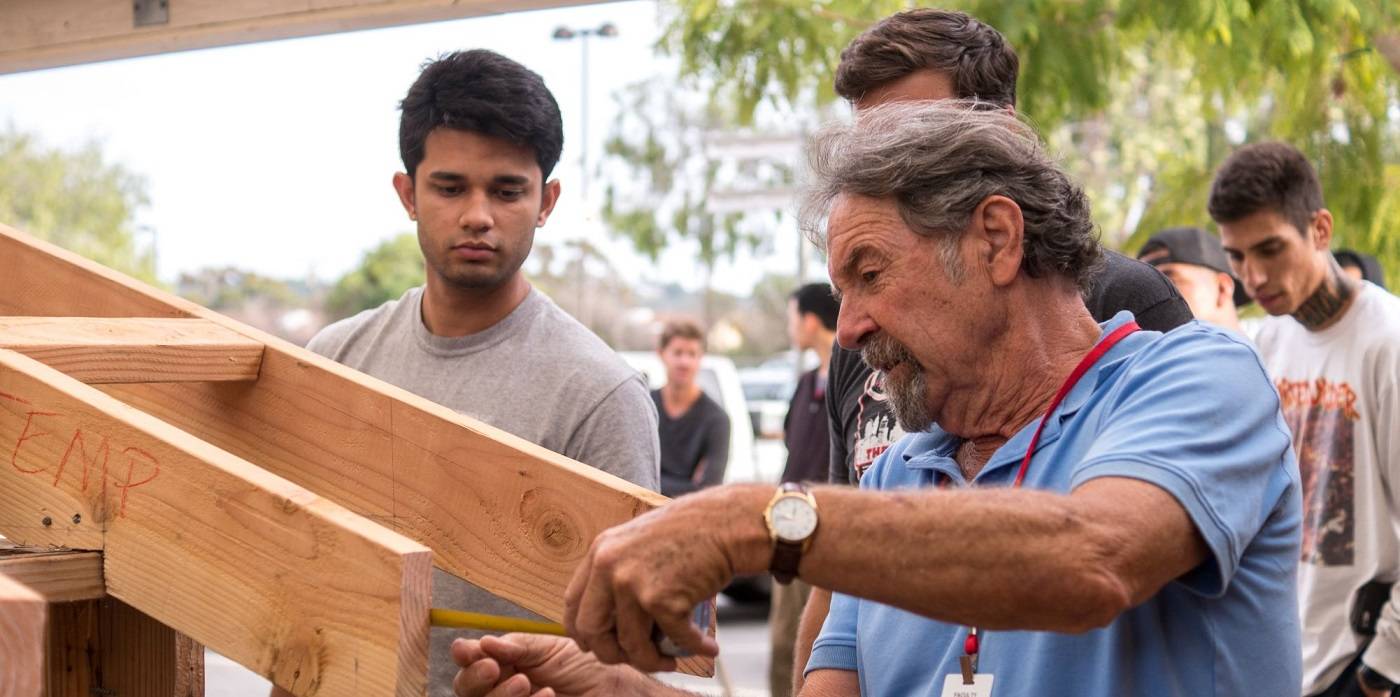
Introduction to residential construction includes four consecutive 4-week courses in framing, finish carpentry, electrical and plumbing, leading to Certificate. Prepares students for workforce and credit Construction Technology program.
Beginning Courses:
Noncredit Construction Module Certificate
- Construction Framing
CTV NC001 This is a beginning course in residential construction framing (housebuilding). Take as a stand-alone course or as part of a 4-course series of construction classes. (It is a good transition course to the credit Construction Technology program at SBCC.) Topics include the framing of floors, walls, ceilings, and roofs, and job site safety. - Construction Finish Carpentry
CTV NC002 This is a beginning course in residential construction finish carpentry (housebuilding). Take as a stand-alone course or as part of a 4-course series of construction classes. Topics include introduction to hand and power tool use, scope of residential finish work, base/case, crown, closets, doors. - Construction Electrical
CTV NC003 This is a beginning course in residential construction electrical work. Take as stand-alone course or as part of a 4-course series of construction classes. Topics include intro to home electrical systems, electrical and job-site safety, tool use and materials identification. - Construction Plumbing:
CTV NC004 This is a beginning course in residential construction plumbing. Take as a stand-alone course or as part of a 4-course series of construction classes. Topics include intro to home plumbing systems and materials, working with piping, installing fixtures, and trouble shooting.
Intermediate Courses:
Noncredit Intermediate Construction Module Certificate
- Intermediate Construction Framing
CTV NC011 An intermediate course in residential construction framing. Take as a stand-alone course or as part of a four-course series of construction classes. Offers more advanced topics in framing including rake walls, I-joists, roof trusses, horizontal openings, etc. Hands-on practice will use the typical tools of the trade. - Intermediate Construction Finish Carpentry
CTV NC012 An intermediate course in residential finish carpentry. Take as a stand-alone course or as part of a four-course series of non-credit construction classes. Offers more advanced topics in finish work including shelf design and install, cabinet install, and fireplace mantle trim. The course uses typical tools of the trade. - Intermediate Construction Electrical
CTV NC013 An intermediate course in constructional electrical work. Take as a stand-alone course or as part of a four-course series of construction classes. Offers more advanced topics in home electrical including circuit design, grounding issues, wire selection, etc. The course uses typical tools of the trade. - Intermediate Construction Measuring and Estimating
CTV NC014 A beginning course in residential construction math. Take as a stand-alone course or as part of a four-course series of construction classes. Topics include working with common, decimal, and carpenter fractions; using a standard tape measure; estimating material; and using a construction calculator
New Courses:
- Deconstruction and Reuse
CTV NC021 An introduction to deconstructing buildings for material reuse. Technique, tools, safety, assessment and markets are covered.
- Repurposing and Refurbishing
CTV NC022 Introduction to repurposing and refurbishing construction materials. Topics include creative re-design, commercial and residential application, marketing and materials processing.
Approved School #136 for California Electrician Trainees:
We are currently looking for an electrical instructor. Until then please fill out
interest form here to be notified
If you are an electrician you may get information on the position here
- Blueprint Reading for Electricians
CTV NC121 Students receive an overview of blueprints, plans and specifications. Participants learn symbols used in electrical-related trades; and prepare and use as-built drawings, wiring and line diagrams, schematics and ladder diagrams. (Approved School #136 for California Electrician Trainees)